

Written by: dr Nikola Milojević
UltraClear and Sciton BBL HEROic are changing the game — and may be showing us what the future of non-surgical aesthetic medicine will look like.
When I started working in aesthetic medicine more than 20 years ago, the biggest breakthrough was simple, yet revolutionary for its time: we could transform the face without a scalpel. Botox and dermal fillers made it possible to soften wrinkles, restore lost volume, open up the eyes and refine facial proportions, all without surgery. Today, however, something different is happening. It is no longer enough simply to change what we see. We are increasingly focusing on what happens beneath the surface — skin quality, its structure and its ability to regenerate itself. That is precisely why I believe we are entering one of the most exciting phases in the history of aesthetic medicine.
This time, the key role belongs to energy-based technologies that use light, ultrasound and radiofrequency to act precisely on different layers of the skin and stimulate its natural renewal processes. Rather than simply changing the skin's appearance from the outside, we are increasingly focusing on improving its structure, quality and regenerative capacity. Because there is something that Botox and fillers — as much as I personally love them and as fantastic as their results can be — simply cannot deliver. They cannot improve skin quality itself.
You can have beautiful cheekbones and perfectly placed filler, but if your skin is pigmented, red, sun-damaged, affected by visible capillaries, enlarged pores or scarring, your face will not look truly youthful or well cared for.
That is why I believe the next decade of aesthetic medicine will be defined by technologies that do not merely conceal the signs of ageing, but act on the skin's underlying biology and stimulate its natural renewal processes.

TAMC Dubrovnik 2026 — The Moment I Realised How Far We Have Come
This year, lasers, light and energy-based devices were among the key topics at our TAMC congress in Dubrovnik. And that was no coincidence. We heard renowned Italian surgeon Matteo Tretti Clementoni discuss the potential of lasers in treating severe scars and skin conditions for which we had very few effective solutions until recently. Oleksandr Turkevych spoke about laser treatment for scars and war-related injuries, while Kingsley Mariadasan, Reha Yavuzer, Tapan Patel and other leading international experts demonstrated just how far modern technology has advanced — to a level that would have seemed almost unimaginable only a decade ago. As I listened, I caught myself wondering: if we can do all this today, what will we be capable of five years from now?
I also delivered two presentations at TAMC on technologies that have particularly impressed me in recent years. One focused on the UltraClear 2910 nm cold fibre laser, and the other on our newest platform, Sciton mJOULE, featuring BBL HEROic, ClearSilk and ClearV technologies.
That was when I truly appreciated just how much the laser centre at Poliklinika Milojević has evolved and improved. We did not simply purchase another laser. By investing in Sciton technology, we created an entire laser ecosystem!
Two Technological Powerhouses — Because No Single Device Can Be the Best at Everything
Patients often ask me, "Doctor, which laser is the best?" My answer is always the same: "Best for what?" It is like asking a surgeon which surgical instrument is the best. Every person has unique skin, and every person's skin has its own story. It carries the marks of genetics, age, lifestyle, sun exposure and everything it has experienced throughout life. That is why I do not believe in one-size-fits-all solutions. The same technology will not necessarily be the right choice for everyone, just as the goal of treatment is not always the same. Our job is to understand what is happening with each individual patient's skin and choose the approach that will deliver the best possible result while preserving what is natural and authentic about their appearance.
Pigmentation is not the same as a blood vessel. A blood vessel is not the same as a scar. A scar is not the same as loose skin. And superficial skin quality is not the same as deep collagen remodelling.
That is precisely why we decided to invest in two exceptionally advanced premium platforms at Poliklinika Milojević: Sciton mJOULE and UltraClear. We were not looking for one device that could do everything reasonably well. We wanted leading technologies that would allow us to treat different skin concerns using different types of energy. And today, even more importantly, we can combine them.
Sciton — Nearly 30 Years of Laser Engineering
Sciton was founded in 1997 in Palo Alto, California, by two laser physicists, Jim Hobart and Dan Negus. Hobart's history in laser technology goes back decades. He was one of the industry's pioneers and developed the first commercially available CO₂ laser. Laser engineering is part of Sciton's DNA. Its BroadBand Light technology, known as BBL, has been evolving since 2004. In 2020, Sciton introduced BBL HERO, followed in 2024 by its latest generation, BBL HEROic with Intelligent Control technology.
BBL HEROic — When Light Becomes Intelligent
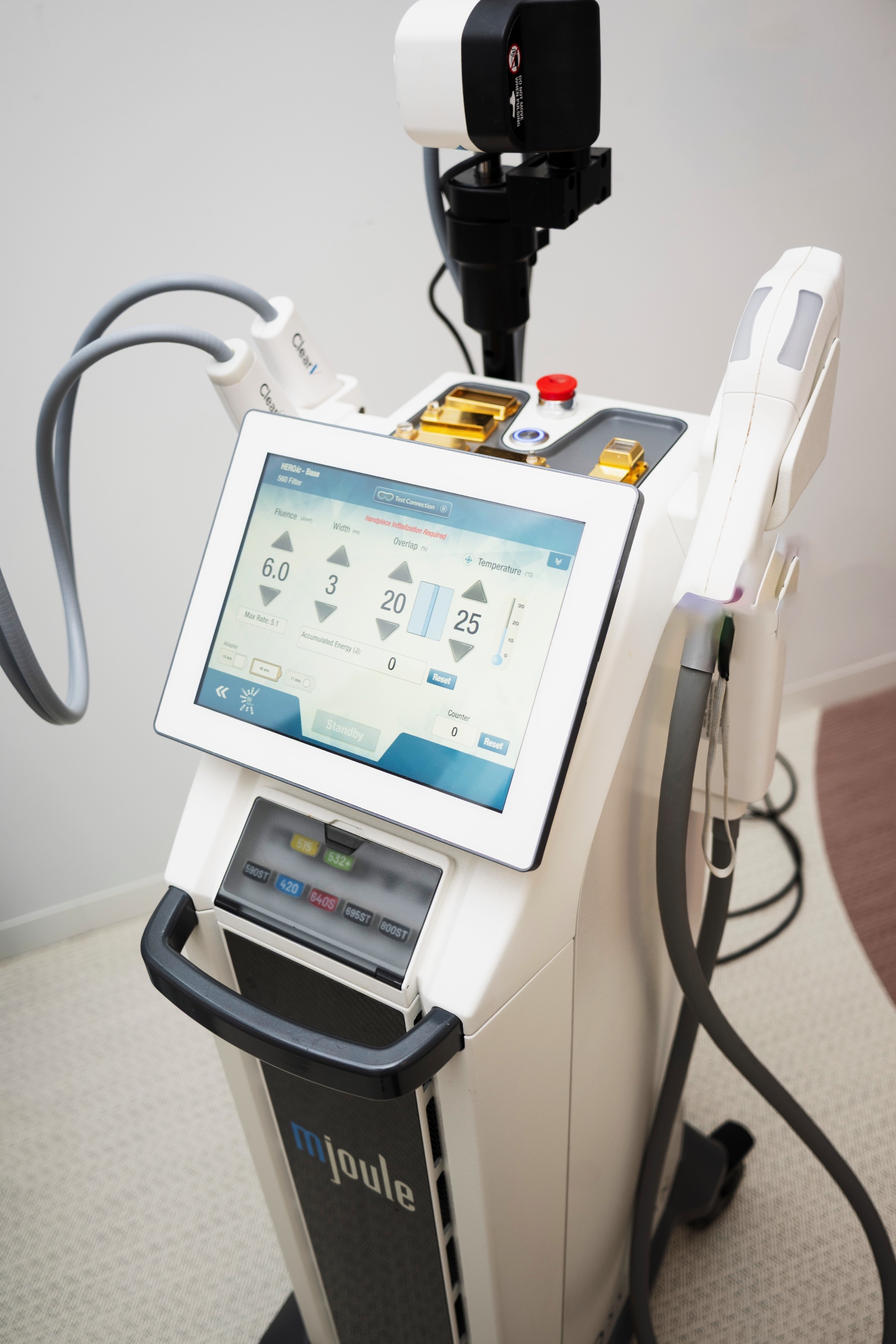
BBL HEROic is far more than a conventional IPL device.
Its Skin Positioning System (SPS) tracks the position and orientation of the handpiece in real time. Intelligent Control processes this spatial information, while Autodynamic Pulsing automates pulse delivery according to the handpiece's movement, speed, rotation and the contours of the treatment area. Put simply, this technology helps the physician achieve exceptionally even coverage of the treated area. I find this fascinating because it represents the beginning of something we will see much more of in medicine: technology is beginning to understand what the physician is doing. Let me be clear, though: technology does not replace the physician. The physician makes the diagnosis, determines the indication and selects the treatment parameters. But technology is becoming an increasingly intelligent partner.
Forever Young BBL — Treating the Skin, Not Just a Spot
With our Forever Young BBL protocol, the goal is not simply to remove one dark spot. We look at the entire face. Pigmentation. Redness. Fine blood vessels. Photoageing. Uneven skin tone. Texture. Overall skin quality and elasticity. We use multiple passes and different treatment parameters to address a range of concerns, including pigmentation, redness, vascular changes, scarring and texture. Through the SkinTyte protocol, we can also target loose skin. The objective is to improve the overall appearance and quality of the skin rather than focus on a single isolated imperfection.
Forever Clear — Bringing Light into the Fight Against Acne
We also use BBL HEROic as part of our Forever Clear protocol for acne. Different wavelengths of light allow us to address several components of the problem, including acne-associated bacteria, inflammation and redness. But once active acne is under control, another question remains: what can we do about the scars it has left behind?
That is where UltraClear comes in. One technology targets active acne, while the other addresses the changes that remain after it. By combining these approaches, we can take a more comprehensive approach to skin health, using the technology best suited to the skin's needs at each stage.
ClearV — Seeing What the Naked Eye Cannot
One of the main reasons we chose the Clear Suite for our mJOULE platform instead of the MOXI option was ClearV. MOXI is an excellent Sciton technology, but its role in superficial resurfacing is already exceptionally well covered at our clinic by UltraClear and its 3DMIRACL treatment. What we were missing was something different: a top-tier vascular laser. Until now, we have used excellent Cutera laser technology to treat vascular lesions. ClearV, however, represents a significant step forward.
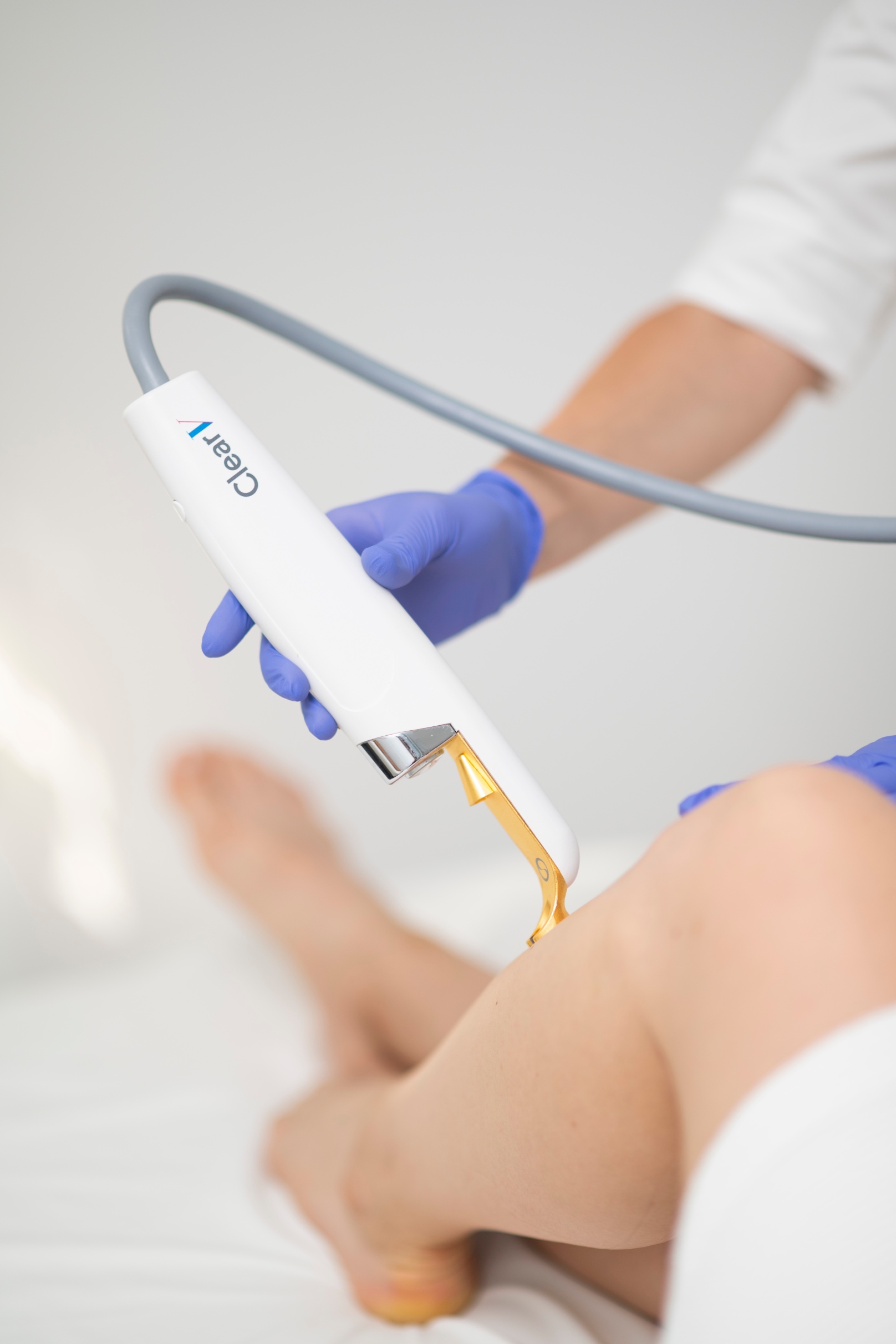
ClearV is a 1064 nm Nd laser designed to treat vascular concerns, including capillaries, spider veins and other visible or deeper vascular structures. One particularly interesting feature is Subsurface Vein Illumination (SVI). This technology helps us visualise certain blood vessels beneath the skin's surface, including feeder vessels that can sometimes be difficult to identify with the naked eye. In other words, we are no longer treating only the capillary a patient sees in the mirror. We can also look for the underlying vessel supplying it. That is an entirely different level of precision.
ClearSilk — My Cinderella Laser
And now we come to perhaps the gentlest member of our new laser family: ClearSilk 1064 nm. It is a non-ablative, non-contact Nd laser treatment. No needles, no need for anaesthesia and virtually no downtime. ClearSilk gently and controllably heats the skin and can be used for revitalisation, diffuse redness, uneven texture, dull-looking skin, scars, enlarged pores, acne and other indications. After treatment, patients can return to their daily activities — even wearing makeup. That is why I affectionately call it my Cinderella laser. Have a wedding, gala dinner, photoshoot or another important event coming up? Do you want your skin to look fresh, healthy and radiant that day — silky, as the name itself suggests? This is the treatment you may be looking for.
Hydrafacial + ClearSilk = Our Glass Skin Protocol
One of our female patients' favourite gentle combinations has become Hydrafacial + ClearSilk. Hydrafacial cleanses, exfoliates and deeply hydrates the skin. ClearSilk then adds gentle laser revitalisation. No needles. No pain. No need to hide away at home for several days. The result is what many people today call glass skin: clear, smooth, hydrated and radiant skin that simply looks healthy. Sometimes, aesthetic medicine does not need to create a dramatic transformation. Sometimes, all it needs to do is achieve the kind of result that makes someone ask you in the evening, "What have you done? You look fantastic!"
UltraClear — A Different Kind of Power When We Need to Go a Step Further
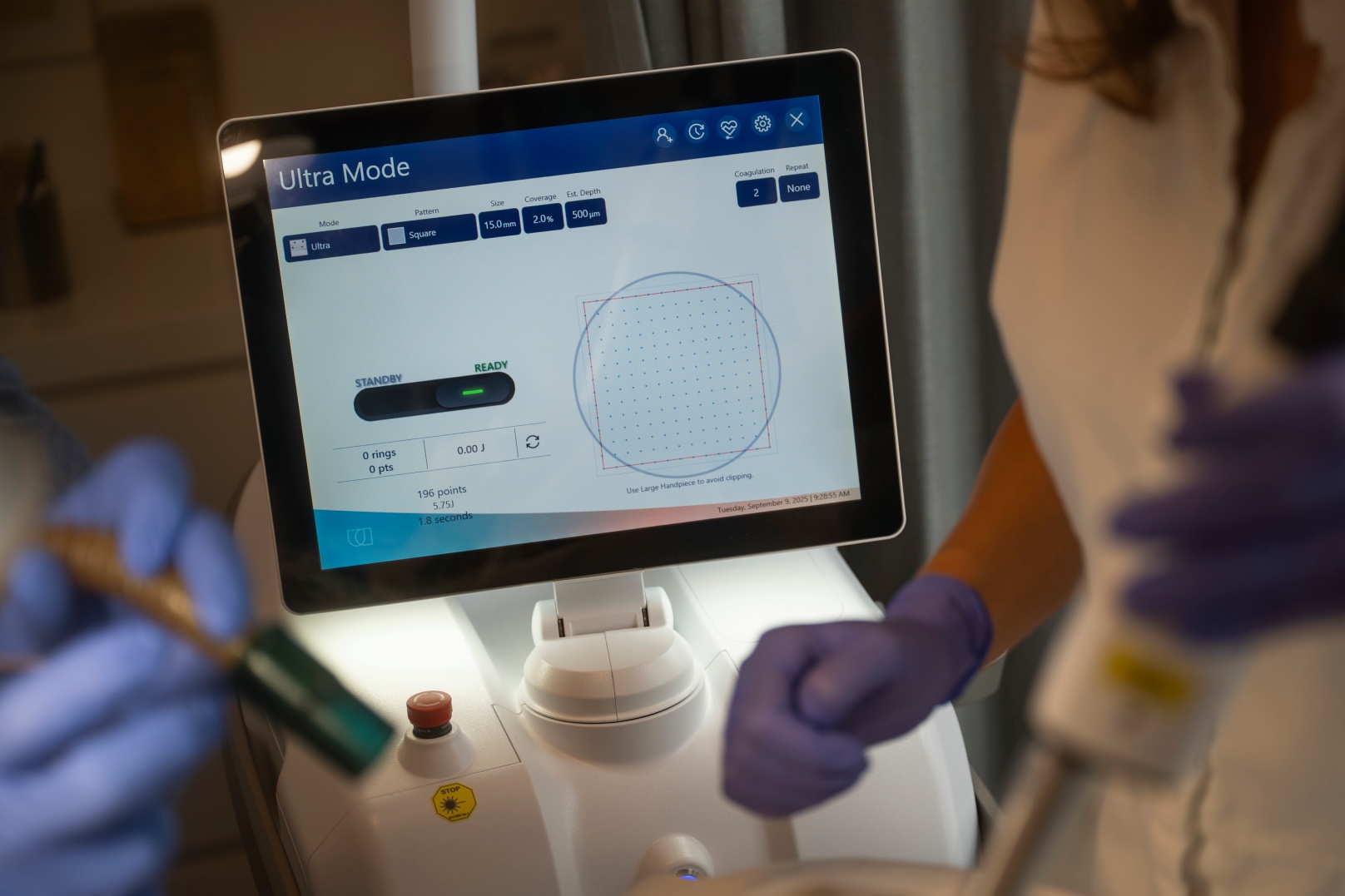
I have written quite a lot about UltraClear already, so I will not repeat the entire story here. However, its role in our laser ecosystem is extremely important. UltraClear is a next-generation 2910 nm cold fibre laser, with a major advantage in its precise control of ablation and thermal effects. With conventional ablative lasers, the thermal effect on surrounding tissue is one factor that can contribute to greater discomfort, inflammation and a longer recovery period. Thanks to its 2910 nm fibre technology, UltraClear allows us to control the relationship between ablation and thermal effects with great precision, depending on the outcome we want to achieve. This means the same device can be adapted to very different needs. It can be surprisingly gentle when that is our goal, yet extremely powerful when a more intensive treatment is required.
From 3DMIRACL to Laser-Coring
Let me be clear: UltraClear is not a single treatment. It is an entire spectrum of possibilities.
At the gentlest end of that spectrum is 3DMIRACL, a very superficial 2910 nm cold fibre treatment that works in the outermost layer of the skin. It targets radiance, discolouration, texture and skin freshness, with minimal downtime. We can then gradually adjust the intensity and depth through different UltraClear protocols. Depending on the treatment goal, we can perform resurfacing, address wrinkles and scars, or stimulate skin remodelling. At the other end of the spectrum is Laser-Coring, a technology that combines the 2910 nm cold fibre laser with 3DIntelliPulse for precise laser coring of tissue and more intensive remodelling.
This range of capabilities is one of the things I find most exciting about UltraClear. We are not talking about a single treatment, but a platform that allows us to tailor treatment intensity to the individual patient's skin and desired outcome.
BBL HEROic + UltraClear — When Technologies Work Together
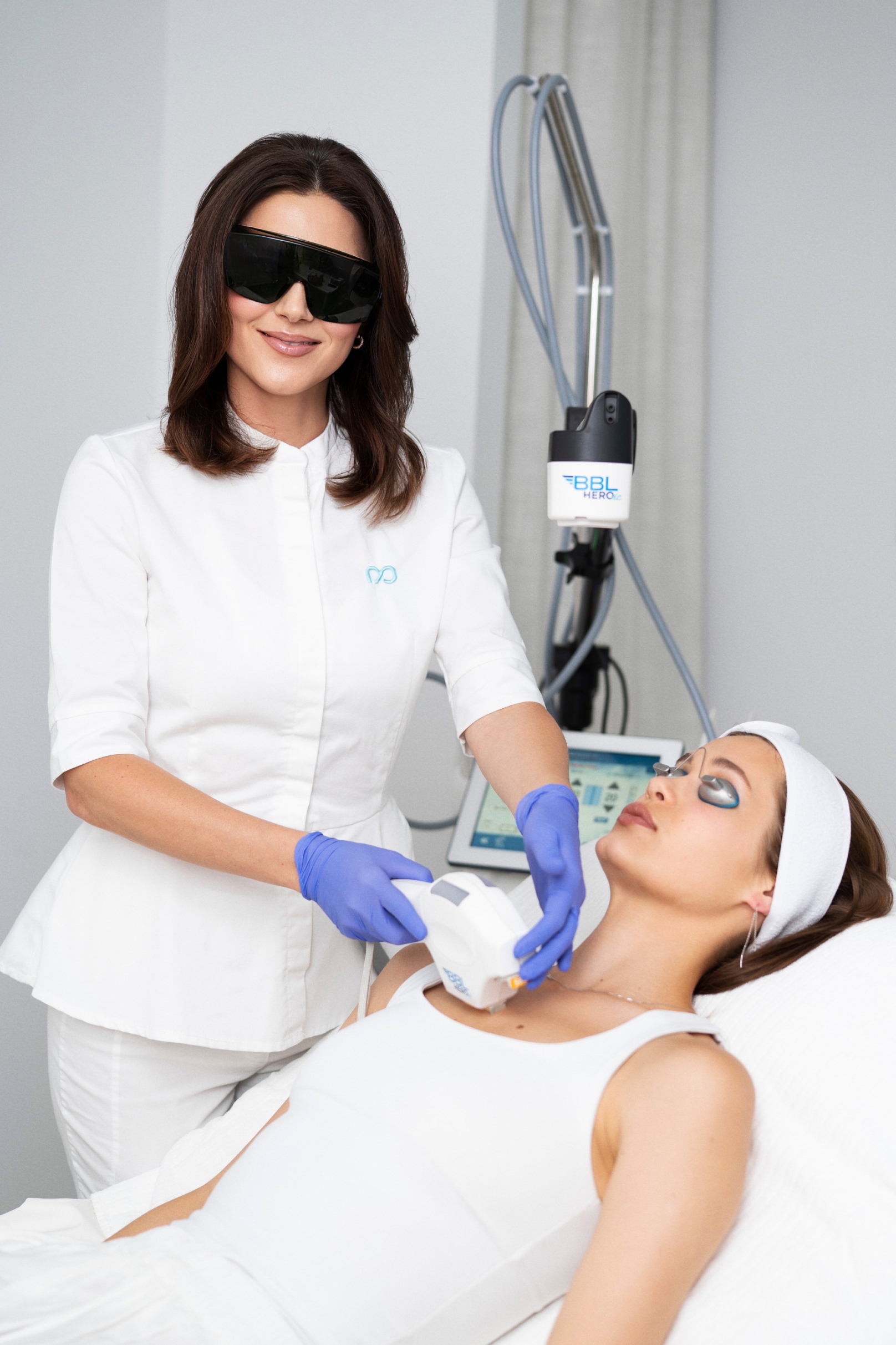
Do patients have to choose between BBL and laser treatment? Not necessarily, provided there is a clear clinical indication. In carefully selected patients, we can perform our multi-pass Forever Young BBL protocol and then, when indicated, add superficial UltraClear 3DMIRACL treatment. BBL targets pigmentation, redness, vascular concerns and photoageing, while UltraClear can address the skin's surface, texture and resurfacing needs. For more intensive UltraClear treatments, we can schedule the technologies separately and use stronger settings, depending on the skin's needs.
That is why I do not see the future as belonging to one "miracle" laser. I see it in our ability to use different forms of energy thoughtfully, precisely and in the right combination, according to what each individual patient's skin needs.
Why Skin Preparation Matters Before We Switch on the Laser
Preparing the skin for laser treatment begins long before the laser comes into contact with it. First, we need to understand its structure and quality, identify any existing damage and assess how it is likely to respond to treatment. Only then can we select the appropriate technology, intensity and, where necessary, combinations with other approaches.
The more options we have, the more important it becomes to focus not simply on the device, but on the skin we are treating. We have learned something else, too: having a fantastic device is not enough. The skin must also be in a condition to respond well to treatment. For patients prone to pigmentation, for example, we may introduce carefully selected medical skincare in advance, such as ZO Skin Health protocols, alongside strict sun protection and active ingredients such as tranexamic acid when indicated. For other patients, we may focus more on biostimulation. I particularly like Sunekos, as well as polynucleotides such as Rejuran and Plinest. The goal is to improve the quality of the extracellular matrix, activate fibroblasts and create the best possible biological environment for skin regeneration.
That is why the future is not about choosing between lasers and biostimulators. It is about combining them thoughtfully: laser + biostimulator + high-quality skincare + a healthy body capable of responding through regeneration.
We Are No Longer Treating Just the Skin — We Are Treating the Face in 3D
Of course, the face is more than just skin. If we want to talk seriously about rejuvenation, we must also consider the structures beneath it. That is why we can build on our approach using technologies we already have at the clinic. We use Emface when we want to target the facial muscle structure. Ultherapy HIFU enables focused ultrasound treatment of deeper layers, while Morpheus8 combines microneedling with radiofrequency energy. Hydrafacial focuses on the skin's surface, cleansing and hydration. We also continue to offer Botox, dermal fillers and biostimulators, alongside chemical peels and SkinPen microneedling. Today, the possibilities for combining treatments are so extensive that it is difficult even to list every treatment and laser technology we can incorporate into an individual plan for the face, neck, décolletage, hands and even the body.
What am I getting at? There is no single treatment that can address every aspect of facial ageing, skin laxity on the body, or the various growths and lesions that may occur on the face and body. Each concern requires a different approach and often a combination of methods. But today, we have the ability to create what I like to think of as an architecture of rejuvenation for an individual patient — thoughtfully combining different treatments to work from the skin's surface all the way down to its deeper supporting structures.
Will Lasers One Day Replace the Scalpel?
This may be a controversial statement, but I believe they will. I think technology will eventually replace an increasing proportion of the procedures we still address through aesthetic surgery today. Not today. And certainly not for every patient. Surgery still has clear indications. There are degrees of excess skin and tissue descent for which a well-performed operation remains the best solution. But look at the direction we are heading in. I find the area around the eyes particularly fascinating. For decades, blepharoplasty has been the primary solution for more pronounced excess and laxity of the eyelid skin. Today, lasers can remodel and tighten skin in ways that would have been unimaginable just a few years ago, and the UltraClear system already includes technologies designed for advanced treatments around the eyes.
The same applies to the face. A surgical facelift physically repositions tissue and, in an appropriate patient, can achieve results that no laser can fully replicate today. But the question that interests me is not, "Can a laser replace every facelift today?"
Of course it cannot. The question is: How many people will actually need the kind of facelift we know today ten years from now?
If we start early enough to maintain skin quality, remodel collagen, treat pigmentation and blood vessels, stimulate regeneration and target different skin depths using lasers, ultrasound and radiofrequency, we may be able to postpone the need for surgery by many years. And for many patients, perhaps one day avoid it altogether.
Imagine the Year 2031!
Let us indulge in a little imagination about the future — and it is not that far away. Imagine walking into a clinic five years from now. A camera and artificial intelligence scan your face. They do not simply identify wrinkles; they analyse microcirculation, pigmentation, scar depth, texture, collagen structure and the biological age of your skin. The software then creates a three-dimensional map of your face, precisely identifying what is happening in each area. It detects pigmentation in one spot, a blood vessel in another, a lack of collagen in a third, and skin laxity in a fourth. The physician confirms the treatment plan, and during the procedure, the device adjusts the type of energy, depth and intensity with almost millimetre-by-millimetre precision.
It sounds a little like Star Trek. A small device approaches the face, a flash of light appears, and the problem disappears. Ten years ago, such a scenario would have sounded like pure science fiction to me. Today, I am no longer so sure. Because part of that future is already here. BBL HEROic already tracks the position and movement of its handpiece in space. UltraClear allows highly precise control of ablation and thermal effects. Laser-Coring opens up new possibilities for laser-based remodelling and tissue contraction. Artificial intelligence is already entering the fields of diagnostics, treatment planning and outcome monitoring.
Of course, we are still a long way from a single device doing everything I have described. But the boundary between what we consider advanced medical technology today and what sounded like science fiction until recently is becoming increasingly thin.
And that is precisely why I find it so exciting to think about what comes next!
Two Laser Powerhouses, One Philosophy: Understand the Skin as Precisely as Possible, Then Give It Exactly the Energy and Intensity It Needs
And what we have today may be only the beginning. Why, then, did we bring two such sophisticated and expensive platforms to Poliklinika Milojević? We could have bought just one device. It would have been simpler — and considerably cheaper. But simple solutions have never been enough to satisfy or interest me. What interests me is discovering the very best we can offer our patients today.
Sciton mJOULE, with its BBL HEROic, ClearSilk and ClearV technologies, gives us exceptionally sophisticated options for treating pigmentation, vascular concerns, photoageing and non-ablative skin revitalisation.
UltraClear offers an entirely different range of possibilities — from gentle 3DMIRACL treatments to intensive resurfacing, remodelling and Laser-Coring.
Together, they allow us to stop asking, "Which laser should we use?" and start asking, "What does this skin need?" I believe that is precisely the future of aesthetic medicine.
Less surgery. Less aggressive intervention. Shorter recovery times. More regeneration. More of the body's own collagen. Greater precision.
We have an increasing range of technological solutions that enable us, as physicians, to achieve things we could only dream of 20 years ago. When I began my career, Botox and fillers seemed like the future. Today, they are part of everyday aesthetic medicine. I am confident that, ten years from now, we will be saying the same about laser skin tightening and regeneration technologies that may replace some of the surgical procedures we perform today.
I do not know exactly what that future will look like. But judging by what I saw at TAMC this year, and everything we can already achieve with UltraClear and the Sciton mJOULE platform, I am fairly certain of one thing: the future of aesthetic medicine will be increasingly precise, increasingly personalised and increasingly focused on regenerating our own tissue.
And part of that future has already arrived at Poliklinika Milojević.
Create Your Individual Treatment Plan. There is no single best laser for everyone. There is a technology and an approach that are best suited to each individual patient's skin.
During consultations at Poliklinika Milojević, we assess skin quality, pigmentation, redness and vascular concerns, texture, scarring, wrinkles and the degree of skin laxity. Based on this assessment, we work together to develop an individual treatment plan that may include BBL HEROic, ClearV, ClearSilk, UltraClear, 3DMIRACL and other technologies available at our Laser Centre.
The goal is not to perform as many treatments as possible. The goal is to know what not to do — and to choose precisely what the skin needs.